12 Rules for Life an Antidote to Chaos Review
12 Rules for Life - a disquisitional review
To say that Jordan Peterson is an interesting and paradoxical human is something of an understatement. We might describe him many ways: a enquiry-oriented bookish who writes out of clinical practice; an egghead who is liked by the Television cameras; an intellectual who likes manual work; a philosopher who likes thinking well – just largely because it can help people become better.
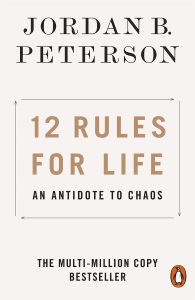 Peterson is a controversial figure, highlighted in March 2019 when the University of Cambridge withdrew its invitation for him to become a visiting swain – partly on the grounds that his views were 'not representative of the educatee body'. One wonders what a university is for if not for the discussion of opposing views. Yet 12 Rules for Life: an Antidote to Anarchy (2018) does not seem to me to be controversial for the sake of it or written primarily to draw attention to the author. Rather it reads as a deeply evidence-based plea for the re-establishment of the classic virtues and of religion in the pursuit of human well-beingness.
Peterson'southward book is written in a strikingly relaxed idiom and designed to provide cocky-help to those who have lost their way in today'southward cross-currents, are suffering mental health issues or are hesitating at a traffic-laden crossroads in life. It is also fascinating and provoking for those who do non fit those categories. Students who are under stress could usefully read some chapters of this book, every bit should anyone thinking of starting a family unit. Anyone responsible for the care of young children would do good from because some of the pitfalls to avert and behaviours to pursue. But no one should call back that the rules Peterson lays down are of piece of cake accomplishment; Norman Doidge in his Foreword acknowledges this.
Peterson steadfastly refuses to be fitted into whatever particular religious or philosophical grouping. Yet he is ane of those rare writers who is prepared to demonstrate unashamedly that organized religion – more than specifically the Christian tradition – actually works: intellectually, psychologically, practically. But what Peterson precisely does non practise is write any sort of apologia or seek to defend the historical veracity of the faith. That is not at all his purpose, and those hoping for that will be disappointed. Only anyone open to because different worldviews of a metaphysical kind would be engaged past the overall direction of Peterson's arguments.
Peterson steadfastly refuses to be fitted into any detail religious or philosophical grouping
Of the 12 rules, only two are negatives. Both are nigh how to care for children, and while deadly serious, are frequently couched in humorous terms. The positives are all unproblematic enough on the surface: 'Stand up up straight'; 'Make friends'; 'Tell the truth'. Peterson is unashamedly moralistic – just that is his point: not to be so has undermined both the fabric of order and our ability to be happy. Underlying this homely and anecdotal approach is a professorial wealth of reading and research (as evidenced by the endnotes) along with decades of clinical experience of helping the disturbed – from the 'worried well' to the seriously psychotic.
The homo predicament: guaranteed suffering
Partly because of his enormous popularity with the alt-right (which he does not espouse) Peterson is a divisive effigy – especially with regard to his views on gender. But in which arc does he sit at the atheist–theist–Christian round table? Do Christians, and those without religion, demand to beware of whatsoever sort of masquerade in an approach which theologically sometimes appears to be 'all things to all men'? For there is certainly an overt theological strain to the book, though Peterson's sources are eclectic and diverse. Gimmicky researchers and writers jostle for prominence alongside Nietzsche, Dostoevsky and Solzhenitsyn, Milton and Jung, the Bible and the Buddha, all of which sources are used to shed light on the human predicament of guaranteed suffering paradoxically created by a expert God. When nosotros one time give way to the idea that Being (Peterson always capitalises the B) is itself evil or even meaningless and uncreated so, he believes, we are lost and pay an appalling price in the life of individuals and fifty-fifty of nations.
There is nothing, to my mind, of the masquerade or hypocrisy near this. Peterson is besides profound a dr. and psychologist to believe that any sort of charade in such matters would convince anyone. The essential stories which are key to understanding our place in the universe and so provide united states with a proper understanding of self are, he unfashionably believes, to exist found in the Quondam Testament – peculiarly the early Genesis narratives. His take on these often affords a fresh insight. He suggests that 'the great myths and religious stories of the past' – especially those from the primeval oral traditions – are moral rather than descriptive in intent (xxvii).
Peterson'south unashamed view is that the earth needs taming
This is not something that will warning many Christians (though of class a well-written morality story is anyway descriptive – of the human status) but will make interesting reading for a religiously illiterate earth that imagines that all Christians read the Bible as they would a schoolhouse science text book. In improver, Peterson realised 'that shared belief systems made people intelligible to one another [and] simplify the world, besides, because people who know what to look from 1 some other can human activity together to tame the world' (thirty). Peterson's unashamed view is that the earth does need taming; nosotros absolutely must accept 'the meaning inherent in a profound arrangement of value or the horror of existence speedily becomes paramount' (xxxi). Keeping nihilism at bay – with its bellboy catastrophic bear on on social behaviour – is the first if not the whole duty of man, for without that our being would exist irredeemably nasty, hardhearted and brusk – in Hobbes's much-used phrase. 'We all take a palpable sense of the chaos lurking under everything familiar' (43). Without cheque, Peterson believes, the 'forces of tyranny expand inexorably' (24). The examination of the thinking of many of the mass murderers in recent years in the US shows nihilism to be at the root of their resentment, hatred and violence.
Ancient wisdom made new
In edifice a firewall against nihilism, Peterson is not doing anything especially new. In the aboriginal globe three schools of idea dominated the intellectual landscape and Peterson, it seems to this reviewer, draws on all three.
In the Hellenistic age when the apostle Paul preached in Athens to an unchurched audience nosotros are told that among the crowd were 'certain philosophers of the Epicureans and Stoics' (Acts 17:18) and Paul couched his address in their cultural terms. There would accept been Cynics there likewise. All three schools, like Peterson, were cosmopolitan rather than nationalistic; each agreed that the earth was a place of suffering and perpetual restlessness which threatened to engulf them unless men (women hardly got a wait in) fortified themselves with an unworldly platonic. The Cynic would say that the style to practice this was to play well the part allotted to him past Fate or Fortune. Peterson says that whether we are 'Kalahari Desert-dweller or Wall Street banker' (44) we have to recognise what is, and what is not, under our control. The Epicurean would say the way was to limit your desires. Peterson advises the states to 'aim small' and to have as a goal making things 'a tiny bit ameliorate than they were this morning…that's magic' (96). The Stoic, with whom Peterson has most in common, would say that we must live in harmony with God'due south volition. This translates as doing what nosotros know to exist dutiful, living a life of active virtue. Peterson is very strong on this, devoting chapters to the necessity of truth-telling, respecting others, removing the plank from your eye before you try to remove the speck from someone's else's, among other tried and tested virtues.
Peterson is very strong on the necessity of truth-telling and respecting others, among other tried and tested virtues
Moral injunctions of this kind drawn from the instruction of Jesus pepper the text as practice more ambiguous statements asserting that 'Truth will non come in the guise of opinions shared past others…It volition instead exist personal' (230). Or his assertion that the Tao is what Jesus was referring to (43) when he said 'I am the Way' (John xiv:half dozen). This seeming syncretism may crusade Christian readers to part company with him at this betoken. Notwithstanding, a careful reading shows Peterson has insights here and Christians would exist incorrect on those grounds alone to stop listening to the many good things he has to say. He is not, for case, sceptical about the miraculous in life, though it is worth remembering that when Paul addressed the philosophers mentioned before it was of resurrection that he spoke (Acts 17:18). This is something that Peterson does not explore or contemplate at all in the book, even though he discusses how the thought of redemption through the cross has impacted various thinkers Christian and non-Christian (189–190).
Meaning: the central need of humanity
Like Yuval Noah Harari, Jordan Peterson is concerned with meaning – the meaning of existence.[1] But unlike the determinist Harari, Peterson finds significant in our choices: 'free choice matters' (56). His contention is that this meaning is expressed with exquisite economic system in the narratives of the beginning 3 chapters of Genesis. In the predatory earth in which nosotros have been placed, it is meaning which keeps mortal despair at bay (28). Peterson considers the belief that people are basically expert and that no one really wants to hurt anyone else extremely naïve and a hopeless ground for life (24). Nonetheless, we are not bereft of all hope because we accept an eternal hunger for Beingness and if we can alive and acquit properly' that hunger will be satisfied.
Peterson considers the belief that people are basically good extremely naïve
To live in that way is to be balanced – to have one foot in what Peterson terms the 'masculine' realm of guild and security and the other in what he calls the 'feminine' realm of 'chaos'. This is, of course, where Peterson begins to get himself into trouble with feminist and other associated lobbies. Only he makes clear that by 'anarchy' he ways the realm of 'possibility, growth, adventure' (43) and that it is only past achieving an equal residuum betwixt these two realms of predictability and unpredictability that pregnant itself will 'well upward from the well-nigh profound depths of your Being' (44). Though rather wordy this is an heady idea and is given practical application.
Order and chaos in Genesis
At this signal Peterson connects his exposition of Genesis with universal human being experience. In his view, the garden represents order and the serpent represents chaos – the blackness dot in the yin side of the Taoist symbol – the two forces that we have to alive between. The pre-fall globe had simply society, no chaos. But this came at the cost of self-consciousness; an awareness of cocky which is the essentially human characteristic. (Peterson is very skillful on the ineradicable gulf between humanity and the residual of the animal kingdom, which has 'no comprehension of their own subjugation to pain and expiry' (54) – something which so many commentators prefer to mistiness today).
He suggests that the Christian tradition of identifying the ophidian with Satan – the very principle of evil itself – shows that 'nothing can be walled off…Nosotros have seen the enemy…and he is us…No walls, however alpine, will go along that out' (47). This is non a total agreement of Satan as many Christians believe, but we are dealing hither with the point at which words and concepts strain and buckle in their attempt to express reality. Peterson, rather than treating the text in cavalier fashion, has the highest regard for the mythopoeic attribute of the early chapters of the Bible: 'These old stories contain nothing superfluous' (48). There is a suggestion here that to exist man necessitates vulnerability to evil, limitation and suffering. If everything threatening were to be banished, the result would be 'permanent homo infantilism and absolute uselessness' (47). Again, these ideas are far from new, but they are expressed in a new manner by someone who has observed and treated a broad spectrum of those whom evil of i kind or another has impacted with devastating strength.
The theology may non be entirely orthodox but it provides a great deal to reflect on
I found Peterson very illuminating on the Autumn and how the opening of human eyes to evil enabled us to imagine the futurity, created a need for security and, thereby, a necessity for work. The outcome catapulted u.s. 'out of infancy, out of the unconscious animal world, into the horrors of history itself' (52). The theology may not be entirely orthodox only it provides a neat deal to reflect on and is compellingly written by someone who finds the kickoff iii chapters of Genesis 'a narrative sequence most unbearable in its profundity' (56). If that is not a recommendation, I don't know what is.
Peterson treats the difficult story of Cain and Abel as archetypal of the common feel that 'the Ideal shames us all' (l). He sees this as being reversed by Jesus: in the desert he overcame the temptations to which Cain succumbed, refusing to turn 'to Evil to obtain what Good denied him' (178). One of the virtues of the book, as exemplified in these passages, is that the highly individual commentary re-vivifies and reinvigorates the text for the reader to whom the words are very familiar, while as well making information technology more than accessible in a contemporary idiom for the less biblically literate. This is partly because Peterson unashamedly draws on Carl Jung for insights to Scripture which are part of a post-Christian psychoanalytically oriented world – a source that many would not consider in approaching the Bible from a position of faith. From these insights Peterson produces nearly face-to-face juxtapositions which volition delight Christian readers: 'Everyone falls short of the celebrity of God'; 'You lot have some vital role to play in the unfolding destiny of the world' (62). These two statements solitary, with their call to unpressured humility linked with the grandest possible purpose in life, can make the heart sing if they are believed. Maybe the psychologist goes too far in implying that how we live can 'atone for our sinful nature' (64) when full atonement is plant only at the cross – simply we all know that trying to put things right after we've messed up, tin make us feel a lot better. In common parlance we do speak of people atoning for what they take done wrong. That'due south of import likewise. Our everyday heroism in the face up of suffering, which to Peterson is often little brusk of miraculous, makes us 'depression-resolution versions of God' (60) – null wrong with that: nosotros are fabricated in his image and in his likeness. Our job he says, is to 'assistance direct the world…a flake more toward Heaven' (63).
The challenge for Christians
There is an implicit just distinct claiming hither for Christians. Peterson recognises the force of such a concept (that each life matters eternally) insofar as when people are able to devote their lives to this, they rediscover 'Meaning, with a majuscule M' and are again able 'to walk with God in the Garden' (p63–four). But he also recognises that all as well ofttimes the Church, Christians downwardly the ages, have not got this 'walk' right.
It was Nietzsche, the most hostile of critics, who recognised that focus on the once-for-all atonement of Christ led to three possible abuses: devaluing earthly life and the suffering of others; passive acceptance of the status quo; rejection of whatever existent moral burden to deed (189). While it cannot exist denied that religious people have succumbed to these pitfalls, it would take been good to run across a reminder in the same passage that Nietzsche was one-sided in thinking that no Christians made any successful attempts at the simulated of Christ. Such a position is historically untenable.[2]
All the same, Peterson makes clear, with the assist of the famous 'M Inquisitor' story from Dostoevsky'southward The Brothers Karamazov, that 'the cracking, corrupt building of Christianity even so managed to make room for the spirit of its Founder' (191). It seems to me that the challenge therefore for Christians today is to ensure that in our ain generation the Church is a strength for unqualified and selfless giving.
Biblical commentary or self-assistance DIY kit?
At times, it is difficult to determine whether in 12 Rules we are reading a biblical commentary, an unusual manual of devotion (occasionally), or a cocky-assistance DIY kit. The iii genres seem to intertwine oftentimes. For instance have these statements – all from the same chapter section: 'It is necessary and desirable for religions to have a dogmatic element' (102); 'The Bible is…the foundational document of Western civilisation' (104); 'God is not to be trifled with' (105); 'you must quit manoeuvring and calculating and conniving and scheming…yous must pay attention, equally yous may never have paid attention before' (107–8); even if you remember yourself atheistic, 'you're merely non an atheist in your actions' (102).
Aslope this mixture of genres is the constant undertow of psychoanalysis and anthropology which almost seem to work confronting the flow of the writer's statement that the Bible and Christianity are primal to the rehabilitation of our private sanity and social stability. The Bible for case may exist foundational but it is also 'a truly emergent certificate…thrown upward, out of the deep, by the collective human imagination, which is itself a production of unimaginable forces operating over unfathomable spans of time' (104). At first sight this would appear to be highly reductive and a negation of God'southward authorship merely that would exist also hasty a conclusion. Peterson, I feel sure, would deny that every bit his intention. His merits for the Bible is that it tin reveal to us 'how we do and should act that can exist discovered in almost no other mode' (104).
That is a very high claim to make and entirely uniform with the thought that God employed the whole nature of things from time immemorial as well his harnessing of man imagination and reason (which is entirely sound theology) in the creation of this unique library of books, our Bible. Is that not a more heady concept than the idea that God irresistibly guided the paw of the scribes as they penned the parchments?
Jackdaw arroyo
This sort of jackdaw approach of lifting ideas from many disciplines tin can be seen in parts of Peterson'due south treatment of the Sermon on the Mount, which he considers 'in some sense' the essence of the wisdom of the New Testament. So far, and then skillful. However, when he continues that Christ's words are 'the attempt of the Spirit of Mankind to transform the agreement of ethics from the initial, necessary Yard Shalt Not…' (109) we seem to accept moved some distance from a traditional understanding. But a closer reading might propose otherwise. His view that 'this is the expression…of the primal desire to fix the world right…and the proper aim of mankind' is surely true. Moreover, if we consider the debate about exactly what Jesus meant when he used the term 'Son of Human' of himself, it is far from impossible that the 'Spirit of Mankind' in its ideal and perfect state is included within that term.
A magnificent meander through a number of disparate disciplines which Peterson dovetails with neat panache and skill
On reflection, what Peterson gives united states, in terms of hermeneutics, is an interpretation which sees the Bible as a record of how people take understood God through the ages. Beginning with a profound myth about the nature of reality, of cause and consequence and of the moral law implanted in our hearts, it continues by showing how these were codification into Commandments and enacted by the Prophets finally reaching their perfect summation in Christ and the Sermon on the Mountain. In the calorie-free of all this, Peterson believes, we are enabled to detect who we are. He is more guarded about making a statement about Scripture as divine revelation, the book in which God has supremely and deliberately made himself known. In this he stops short of affirming what has been a foundational belief in every period of history, and throughout the mainstream global Christian Church building.
12 Rules For Life is a magnificent meander through a number of disparate disciplines which Professor Peterson dovetails with great panache and skill. Such wanderings do, yet, mean that he sometimes executes a surprising about-plough or seeming contradiction. On the ane hand he tells united states of america that amending drunken behaviour or bad eating habits is well-nearly impossible: 'I cannot merely make myself over in the image constructed by my intellect' (193); on the other hand he tells usa 'simply stop…Finish acting in that particular, despicable style' (158). Different contexts peradventure, but nevertheless a touch disruptive to the reader trying to discern what role the three elements of human volition, psychotherapy, and the piece of work of the Holy Spirit each play. Every bit, when dealing with the origins of morality (169) it is not articulate as to how Peterson's comments most human self-interest and group behaviour are to be counterbalanced against the work of God who places eternity in our hearts. Peterson'southward precise view on these matters is unclear: he does not explicitly deny or affirm the notion that human conscience (our awareness of correct and wrong) is a souvenir of God. Christian readers will want to keep this in heed, along with Peterson's credible lack of understanding or reference to the work of the Holy Spirit. In a footnote to folio 169, Peterson intriguingly reminds u.s.a. that his description of how moral principles and the concept of God emerged remains true whether or not God really exists. He thereby keeps his cards close to his chest, though he does allow u.s.a. know that he outgrew the 'shallow' Christianity of his youth (196), went through many phases of doubt and emerged realising that 'To have meaning in your life is improve than to have what you want' (200).
Epiphany
To the present reader the climactic moment of the unabridged book immediately follows this epiphany when, in a purple passage of prose which is all but poetry, Peterson speaks of meaning and God in terms which are as much Buddhist every bit they are Christian (201). This, in my view, is the closest we get to the private earth of this great thinker and teacher who wants to share his vision that honest, authentic living tin 'reduce the suffering bellboy on existence to endurable levels' (216).
Peterson has profound insights to share from disciplines that religious people can acquire from, but might initially find alien to their organized religion
Periods of sudden intellectual growth are also apt to be times of moral chaos. It was truthful for Rome in the second century BC and for Europe in the sixteenth century for instance. We might utilize that principle also to today's earth, and if then, Peterson's book is something of a guide to the moral maze as he interleaves Christian insight with the gleanings of secular studies.
There is good precedent for this. The letters of Paul and the Gospel of John are both full of Greek modes of thinking. It was a strength of the early Church building that it both taught and learned from the Hellenistic earth information technology inhabited. Augustine was saturated in Plato and the churchmen of the Centre Ages were students of Aristotle. Peterson today has profound insights to share from disciplines that religious people can learn from, but might initially find alien to their faith. But Christians should sit down up and accept note of what he has to offer and be glad that Christian truths tin can filter out from the volume to the surrounding unchurched world.
Hashemite kingdom of jordan B Peterson. 12 Rules for Life: an Antidote to Chaos (Allen Lane, 2018) 448pp, £fourteen.00hb / £6.99pb.
References
[i] Run across my review of Harari's 21 Lessons for the 21st Century
[2] For a total defence of the Church building's positive office in social history through the ages see my book The Evil That Men Practice, (Sacristy Printing, 2016) which explores this from the first century to the twenty-first.
Source: https://www.bethinking.org/culture/12-rules-for-life-a-critical-review
0 Response to "12 Rules for Life an Antidote to Chaos Review"
Post a Comment